Variable charging
Partial state of charge
Designed to continue operating under the changing charge conditions of a hybrid system.


NICAD POWER PTE LTD
Renewable energy · Solar range
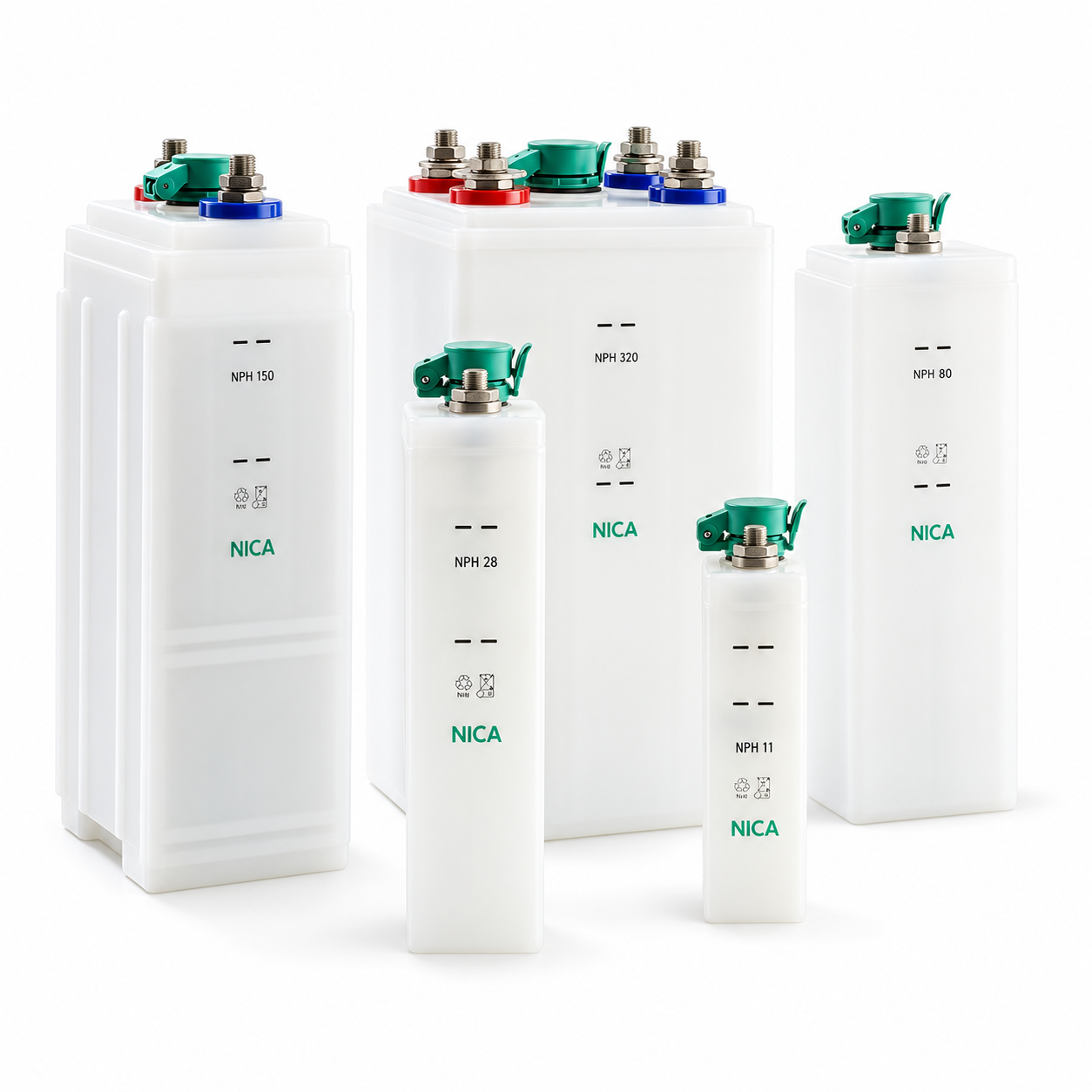
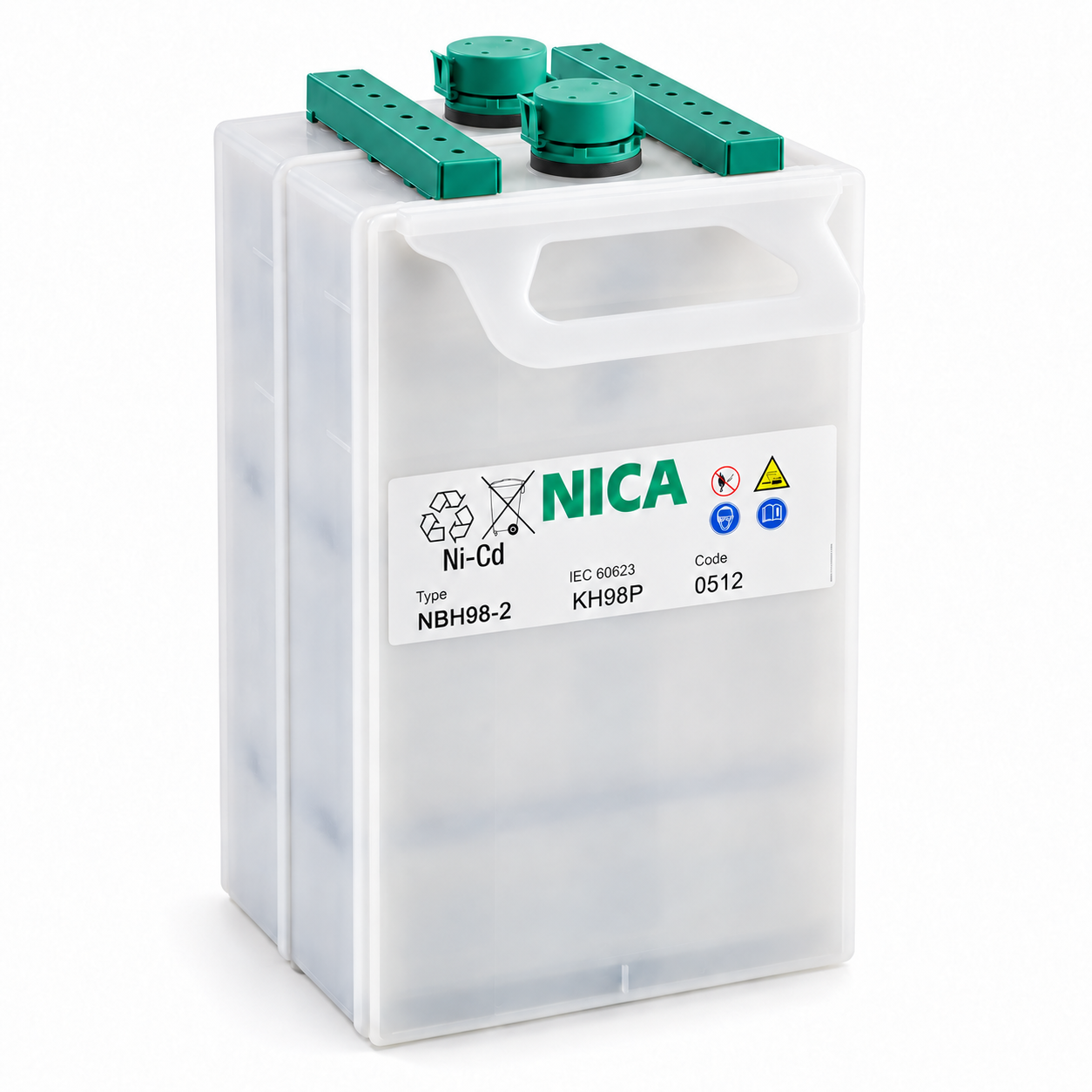
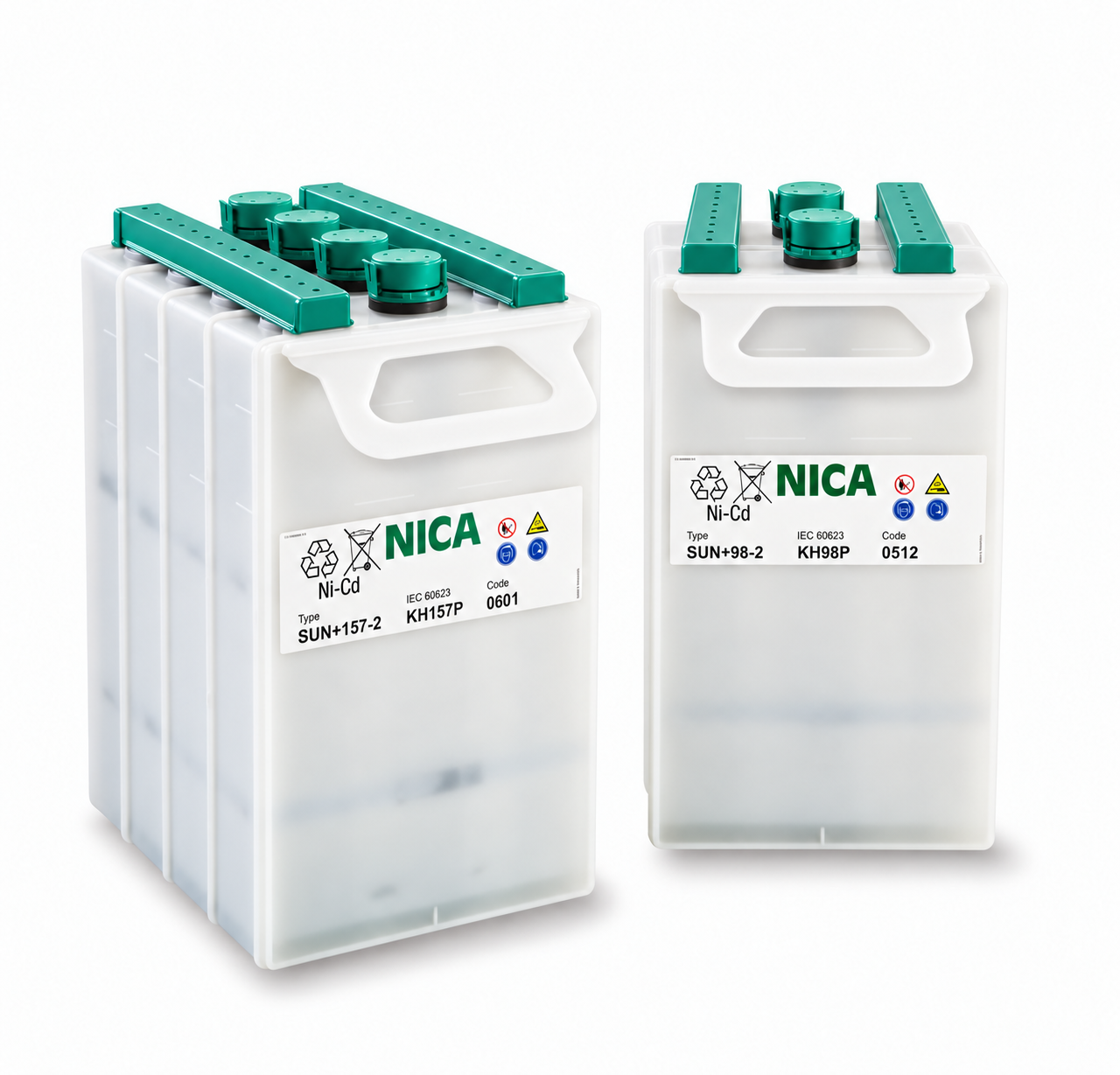
NICA SUNPLUS batteries are designed for photovoltaic installations and stand-alone hybrid systems with changing charging conditions. They support long backup periods and operation at a partial state of charge.
Pocket plate construction, a generous electrolyte reserve and low maintenance requirements suit remote renewable-energy installations.
| Rating basis | Capacity range | End voltage | Selection focus |
|---|---|---|---|
| 120-hour discharge | 50–1,830 Ah | 1.0 V per cell | Long-duration energy storage |
| 5-hour discharge | 45–1,700 Ah | 1.0 V per cell | Higher-rate comparison |
Capacity depends on the discharge rate. Use the rating that matches the required backup duration.
Variable charging
Designed to continue operating under the changing charge conditions of a hybrid system.
Remote installations
Electrolyte reserve and charging control help extend topping-up intervals.
Rugged construction
Steel pockets and polypropylene containers support service in demanding environments.
Size the battery using average load, required autonomy, local temperature and the energy available for daily charging. Include the permitted charging voltage and minimum end voltage.
The typical charge voltage is 1.5 V per cell; recommended settings vary with daily depth of discharge. Confirm the cell count and charging regime for the complete system.
Topping-up intervals depend on temperature and charging voltage. Inspect electrolyte levels and use the model-specific maintenance instructions.