Reduced water loss
85–95% recombination
The recombination level depends on the floating voltage.


NICAD POWER PTE LTD
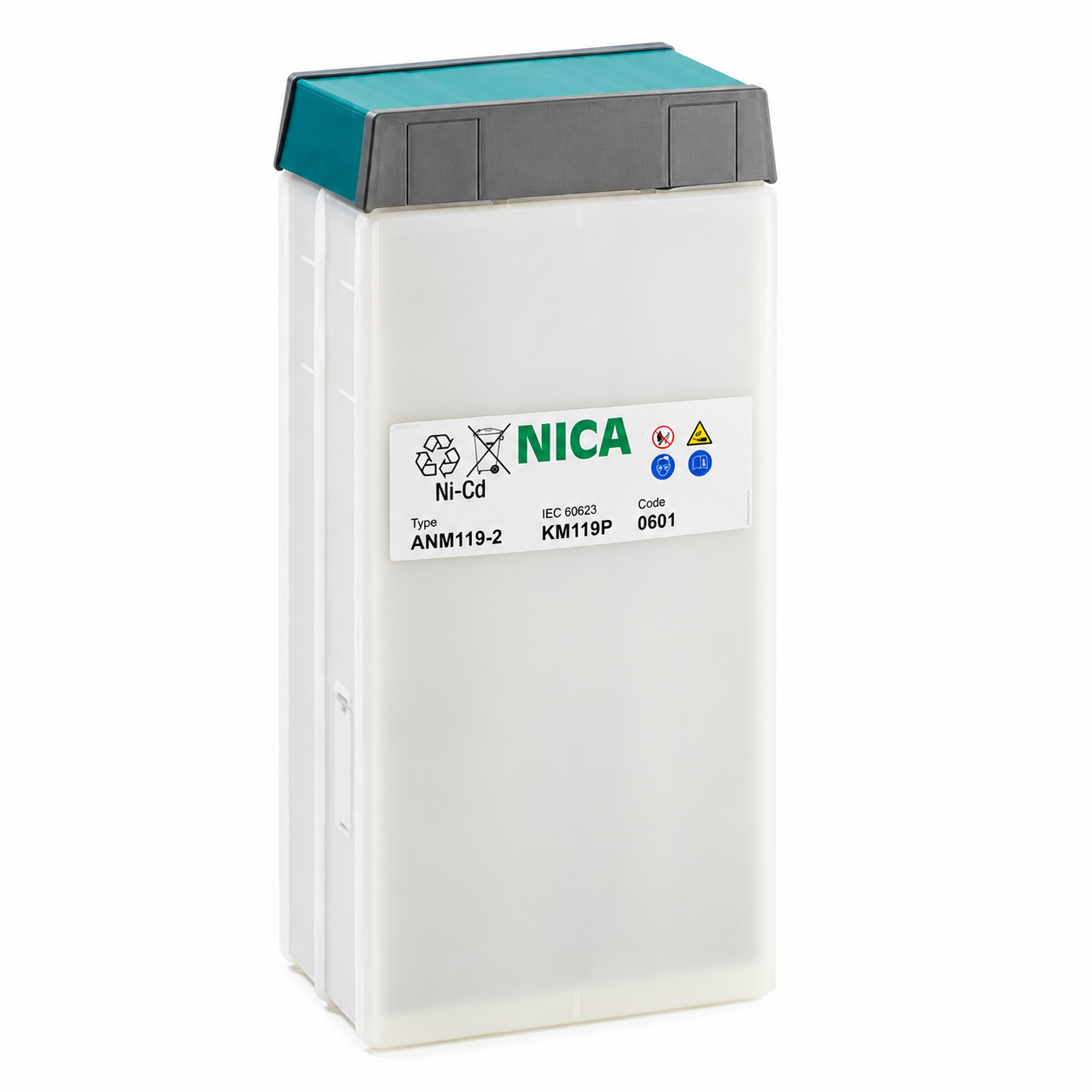
Ultra low maintenance · Pocket plate
ANM nickel-cadmium batteries combine pocket plate construction with controlled gas recombination and low-pressure flame-arresting vents. They are designed for industrial standby duties where reliability and reduced maintenance are priorities.
The range uses free electrolyte, with topping-up possible when required. Float-corrected performance data supports sizing for batteries kept on continuous standby charge.
| Range | Rated capacity | Construction | Typical use |
|---|---|---|---|
| ANM | 8–850 Ah (C5) | Single cells and multi-cell blocks | Stationary industrial standby power |
Block voltages and dimensions vary with cell count and model. Choose capacity using the required discharge current, end voltage and duration.
Reduced water loss
The recombination level depends on the floating voltage.
Practical standby sizing
Discharge data accounts for prolonged float charging.
Service access
A flame-arresting vent supports controlled recombination, while topping-up remains possible.
Use the ANM charging and installation requirements for the selected model. Floating voltage affects recombination and water consumption.
Check charger settings, electrolyte condition, connections and the operating environment during preventive inspections. Low water consumption reduces servicing needs, but does not remove the need to inspect the installed system.